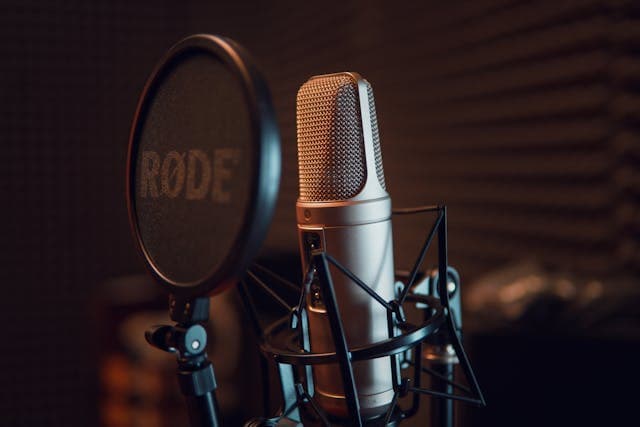
Automatic transcription used to be a joke. Early speech-to-text tools produced garbled output that took as long to fix as typing from scratch. You could spend an hour correcting a 10-minute recording and still miss errors.
That changed with OpenAI's Whisper model in late 2022. Modern AI transcription hits 95-98% accuracy on clear audio in major languages. For English with a decent microphone, it is often above 98%. You read the transcript and fix a handful of words instead of typing the whole thing.
Transcription is no longer a luxury service. Podcasters, journalists, researchers, students, and anyone who records meetings can convert audio to searchable, editable text in minutes.
How Modern AI Transcription Works
The breakthrough behind Whisper and similar models is the transformer architecture trained on massive amounts of paired audio and text data. What happens when you transcribe a file:
1. Audio preprocessing. The audio is converted to a mel spectrogram, which is a visual representation of sound frequencies over time. This turns the audio into something the neural network can process, similar to how image models process pixel data.
2. Encoder processing. The transformer encoder analyzes the spectrogram and builds an internal representation of the audio content, capturing not just individual sounds but context, intonation, and speech patterns.
3. Decoder generation. The decoder generates text token by token, predicting each word based on the audio representation and the words already generated. This is where context matters: the model uses surrounding words to disambiguate homophones ("their" vs "there" vs "they're") and fill in unclear segments.
4. Timestamp alignment. Advanced models produce timestamps for each word or segment, which enables features like synchronized subtitles and click-to-seek in audio players.
Whisper was released as open source, which means it runs locally on your computer without sending audio to any server. This matters for confidential recordings. Newer models like Whisper v3 and distilled variants offer better accuracy with faster processing times.
Cloud-based services like AssemblyAI, Deepgram, and Google Speech-to-Text use similar architectures but add features like speaker diarization (identifying who said what), real-time streaming, and custom vocabulary.

Getting the Best Transcription Accuracy
The quality of your transcription depends heavily on the quality of your audio. Here are practical ways to improve results:
Use a decent microphone. You do not need studio equipment. A $50 USB microphone or a modern laptop with a good built-in mic produces audio that transcribes well. The key factor is signal-to-noise ratio: the voice should be louder than the background.
Minimize background noise. Air conditioning, keyboard typing, cafe chatter, and echo from hard surfaces all reduce accuracy. Close the door, mute when not speaking, and use a directional microphone that picks up what is in front of it rather than the whole room.
Speak clearly but naturally. You do not need to enunciate every syllable or speak slowly. Modern models are trained on natural speech. But avoid talking over each other in group settings, as overlapping speech is still the hardest thing for AI to handle.
Choose the right language setting. Most transcription tools auto-detect the language, but specifying it explicitly improves accuracy. If a recording switches between languages, some tools handle this (Whisper's language detection works segment by segment), but accuracy drops at the transition points.
Audio format matters less than you think. MP3, WAV, M4A, FLAC - the model handles all common formats. But very compressed audio (low bitrate MP3) loses high-frequency information that helps distinguish similar sounds. If you have a choice, record in WAV or high-bitrate MP3.
After transcription, use the Word Counter to get a quick overview of the transcript length. A 30-minute interview typically produces 4,000 to 5,000 words.
The quality of your transcription depends heavily on the quality of your audio.
Use Cases: From Podcasts to Meeting Notes
Podcasters. Transcripts make your podcast content searchable, accessible to deaf and hard-of-hearing audiences, and indexable by search engines. Each episode transcript becomes a blog post or show notes page. Some podcasters use transcripts as the basis for newsletter content.
Meeting notes. Record your meeting (with consent), transcribe it afterward, and use AI to summarize the key points and action items. This is more reliable than manual note-taking because you capture everything and can verify later. Tools like Otter.ai and Fireflies specialize in meeting transcription with CRM integration.
Journalists and researchers. Interview transcription used to be the most tedious part of the job. A one-hour interview would take 3-4 hours to transcribe manually. AI does it in 5-10 minutes. The journalist still needs to verify quotes and proper nouns, but the bulk of the work is automated.
Students. Lecture transcription creates searchable study materials. Instead of rewatching a 90-minute lecture to find one concept, search the transcript. Some students combine transcription with AI summarization to create condensed study guides.
Content repurposing. A single video or podcast recording can be transcribed and then repurposed into blog posts, social media clips, email newsletter content, and documentation. The transcript is the raw material; AI tools can reshape it for different formats.
The Text Splitter is useful for breaking long transcripts into manageable chunks, whether for further AI processing, blog post segmentation, or translation.
Speaker Diarization: Who Said What
Basic transcription gives you a single block of text without indicating who is speaking. Speaker diarization adds labels like Speaker 1, Speaker 2 to distinguish between voices.
This feature is critical for meetings, interviews, and any recording with multiple speakers. Without diarization, a meeting transcript is a wall of text where you cannot tell if the CEO or the intern made a particular statement.
How it works: the system analyzes voice characteristics (pitch, speaking rate, timbre) to cluster speech segments by speaker. It does not know the speakers' names, only that different segments belong to the same or different voices. You assign names manually after transcription.
Diarization accuracy varies. Two speakers with very different voices (male and female, for example) are easy. Four or more speakers with similar voices are harder. Speakers talking over each other create segments that are difficult to attribute.
Whisper by itself does not include diarization, but tools like pyannote.audio (open source) and commercial services add it on top. If you need speaker labels, make sure your chosen tool supports diarization before processing your audio.
Basic transcription gives you a single block of text without indicating who is speaking.
Privacy and Security Considerations
Transcription often involves sensitive content: business meetings, medical consultations, legal proceedings, personal interviews. Where your audio goes matters.
Local processing (Whisper running on your machine) keeps everything on your hardware. The audio never leaves your computer. This is the most secure option but requires a capable machine. Whisper runs well on most modern laptops, though large files take longer without a GPU.
Cloud services send your audio to remote servers for processing. Check the provider's data retention policy. Some delete audio immediately after transcription, others retain it for a period. For confidential content, look for services that offer HIPAA compliance (healthcare), SOC 2 certification, or explicit data processing agreements.
API-based services (AssemblyAI, Deepgram) typically process audio in transit and do not store it unless you opt in. Read the terms of service. If you are processing recordings under GDPR jurisdiction, ensure the service has a data processing agreement available.
For most personal and business use, cloud-based services with reasonable privacy policies are fine. For medical, legal, or highly confidential recordings, use local processing with Whisper or a service with explicit compliance certifications.
FAQ
How long does transcription take?
Local Whisper processing on a modern laptop takes roughly 1-2x the audio duration for the standard model. A 30-minute recording takes 30-60 minutes to transcribe. Faster models (tiny, base) process in real time or faster but with lower accuracy. Cloud services are typically faster, returning results in 20-50% of the audio duration. Real-time services transcribe as you speak.
Can AI transcribe accented speech accurately?
Modern models handle most accents well because they are trained on diverse speech data. Accuracy is highest for American and British English, but models like Whisper v3 perform well with Indian, Australian, South African, and non-native English accents. Very heavy accents or regional dialects may require custom fine-tuning for best results.
What about filler words like "um" and "uh"?
Most transcription tools include filler words by default. Some offer a "clean" mode that removes them. For meeting notes and content creation, removing fillers makes the text more readable. For research or legal transcription, keeping them preserves the exact record of what was said.
How do I handle technical terms and proper nouns?
AI models often misspell company names, product names, and specialized terminology because they are not in the training data. Most tools allow you to provide a custom vocabulary list of terms the model should recognize. Add proper nouns, acronyms, and domain-specific terms before processing to improve accuracy.
Is AI transcription good enough for legal or medical use?
For drafts and reference, yes. For official records, it depends on jurisdiction and requirements. Many legal and medical transcription workflows use AI for the first pass and then have a human reviewer verify and correct the output. This hybrid approach is faster and cheaper than pure manual transcription while maintaining the accuracy standard these fields require.
### How long does transcription take.
LLM Pricing Comparison 2026: How Much Does AI Really Cost?
LLM pricing compared: GPT-4o, Claude, Gemini, Llama, Mistral, DeepSeek. Cost per million tokens, batch discounts, and budget examples to plan your AI spend.
How to Fine-Tune LLMs: Data Format Guide for 2026
Fine-tuning data format guide for OpenAI, Anthropic, and Google. JSONL examples, validation tips, and best practices for preparing training data.
AI Context Windows and Token Limits Explained
Context window and token limits explained: what they are, how they differ across GPT-4o, Claude, and Gemini, and strategies for managing token constraints.