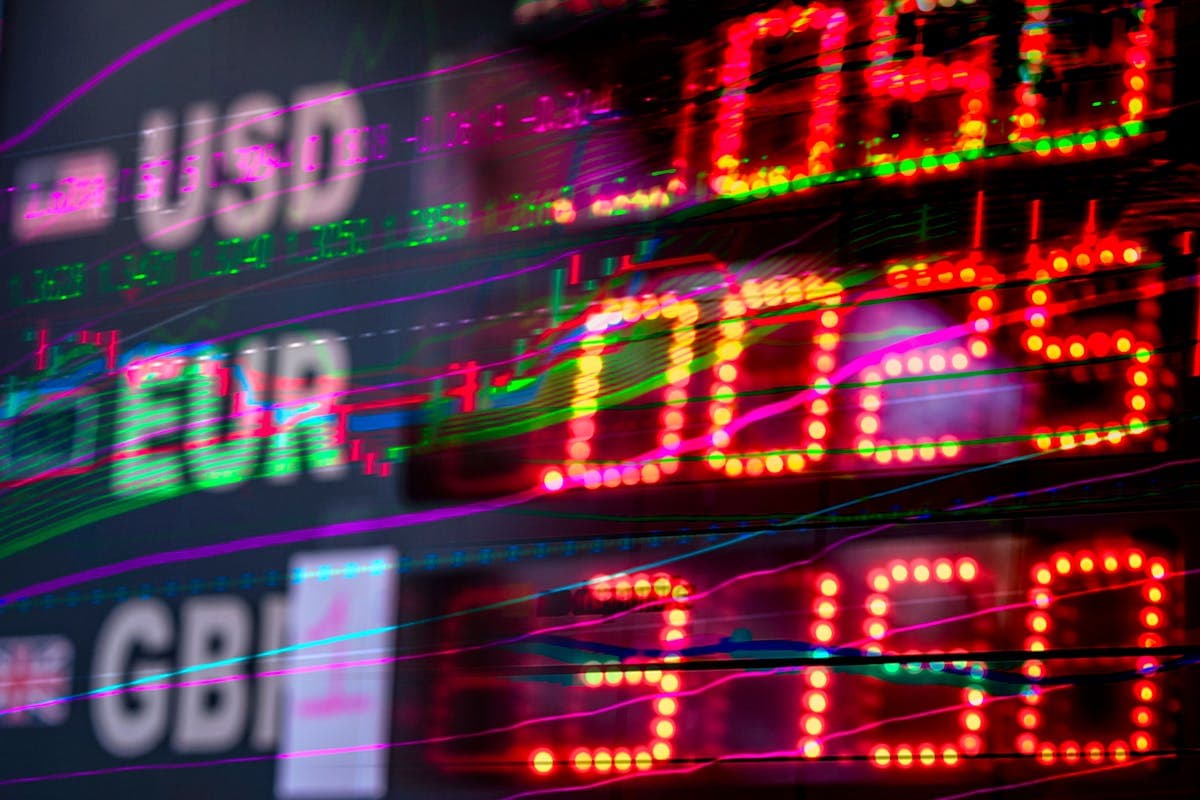
Why Currency Exchange Rates Are Confusing
Exchange rates are one of those things that seem simple until you need them. 1 USD equals about 0.92 EUR. Straightforward. But then you try to actually convert money and discover that your bank charges a different rate than Google shows, your credit card adds a 3% fee, the airport exchange booth has a rate that is 8% worse than the market rate, and the rate changed since yesterday.
Understanding how exchange rates work, where to find accurate rates, and how different conversion services add their margins saves real money. The difference between the best and worst conversion options can be 5-10% of the amount, which adds up quickly on large transactions.
A good currency converter shows you the mid-market rate (the rate that banks trade at between themselves) and helps you understand how much you are actually paying above that rate when you convert money through a specific service.
How Exchange Rates Are Determined
Exchange rates for freely traded currencies (USD, EUR, GBP, JPY, CHF, AUD, CAD, etc.) are set by the foreign exchange market (forex), where banks, corporations, governments, and traders buy and sell currencies 24 hours a day, 5 days a week.
The rate you see on Google, XE, or financial news sites is the mid-market rate (also called the interbank rate or spot rate). This is the midpoint between the buy price and the sell price that large banks trade at. It is the "real" rate, but it is not the rate you will get as a consumer or small business.
Every currency conversion service adds a margin on top of the mid-market rate. This margin is how they make money:
Banks: typically add 1-3% margin. Some charge a flat fee on top.
Credit cards: most add 1-3% foreign transaction fee. Some premium cards charge 0%.
Specialist services (Wise, Revolut, OFX): typically 0.3-1% margin with transparent fees.
Airport exchange booths: 5-12% margin. These are the worst option by far but survive because travelers need cash urgently.
PayPal: 3-4% margin when converting currencies, sometimes hidden in the "conversion fee" that is included in the exchange rate shown.
The rate also fluctuates constantly during trading hours. A rate checked at 9 AM might be 0.5% different by 3 PM. For large conversions, timing matters. For small amounts, the difference is negligible.
Use a Percentage Calculator to quickly figure out the markup. If the mid-market rate is 1 USD = 0.92 EUR but your bank offers 0.89 EUR, the markup is (0.92 - 0.89) / 0.92 = 3.3%.
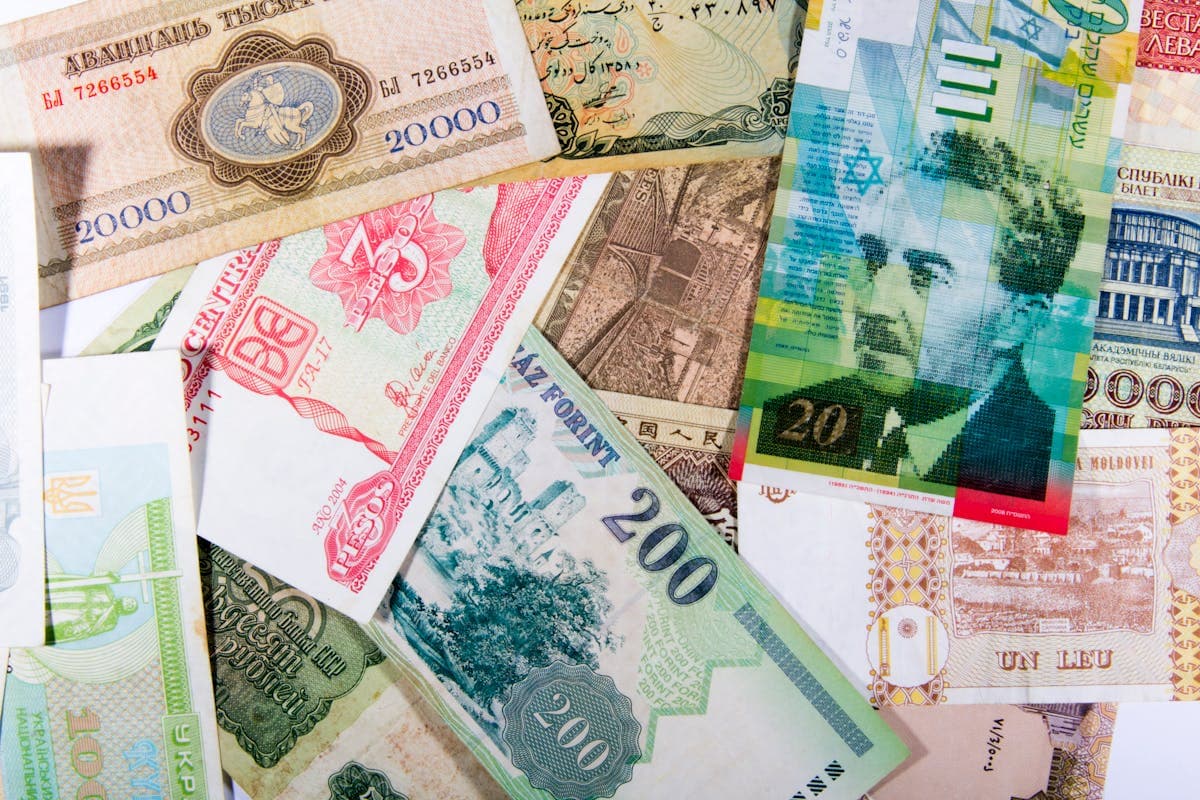
Finding Accurate Live Exchange Rates
Not all rate sources show the same number, and understanding which is which prevents confusion:
Mid-market rate sources: XE.com, Google Finance, Yahoo Finance, Bloomberg. These show the interbank rate, which is the benchmark you should compare against. This is the rate you would get in a hypothetical zero-fee conversion.
Bank rates: your bank's rate includes their margin. Check your bank's website or app for the rate they actually apply to your transactions. This is the rate that matters for your actual cost.
Credit card rates: Visa and Mastercard publish their exchange rates online. Your rate is the network rate plus your card's foreign transaction fee. Cards with no foreign transaction fee give you the network rate directly, which is very close to mid-market.
Cash exchange rates: these are always worse than electronic rates because the service needs to handle, transport, and secure physical cash. Cash exchange makes sense only when you need physical local currency and cannot use a card.
For business transactions, pay attention to the settlement date. The rate at which your transaction is processed might be different from the rate when you initiated it. Wire transfers can take 1-3 business days, during which the rate changes.
The Unit Converter handles simple metric and imperial conversions, but for currency, you need a dedicated tool with live rate feeds since currency values change constantly.
Not all rate sources show the same number, and understanding which is which prevents confusion: **Mid-market rate sources**: XE.com, Google Finance, Yahoo Finance, Bloomberg.
Saving Money on Currency Conversion
For travelers:
Use a no-foreign-transaction-fee credit card for all purchases abroad. Cards from Capital One, Chase Sapphire, and many fintech cards charge no FX fee and use near-mid-market rates. This is usually the cheapest conversion option.
When paying by card, always choose to pay in the local currency. Merchants abroad often offer to charge you in your home currency ("dynamic currency conversion" or DCC). This convenience comes at a 3-7% markup. Always decline and pay in the local currency.
Get local cash from ATMs, not exchange booths. Bank ATMs use better rates than exchange counters. Use your bank's app to check if they have partner ATMs abroad that waive withdrawal fees.
Order currency from your bank before traveling. Many banks offer better rates for pre-ordered foreign cash than airport exchanges. Order a few days before departure.
For businesses:
Use specialist FX services like Wise (formerly TransferWise), OFX, or Airwallex for international payments. They charge 0.3-1% vs banks' 1-3%.
Batch your conversions. Converting one large amount costs less (in percentage terms) than many small amounts, because some services charge flat fees per transaction.
Consider a multi-currency account. If you receive income in multiple currencies, a multi-currency account (Wise, Revolut Business) lets you hold foreign currency and convert only when rates are favorable.
Set rate alerts. Services like XE and Wise let you set an alert for your target rate. When the rate hits your threshold, you convert. This works well for non-urgent conversions.
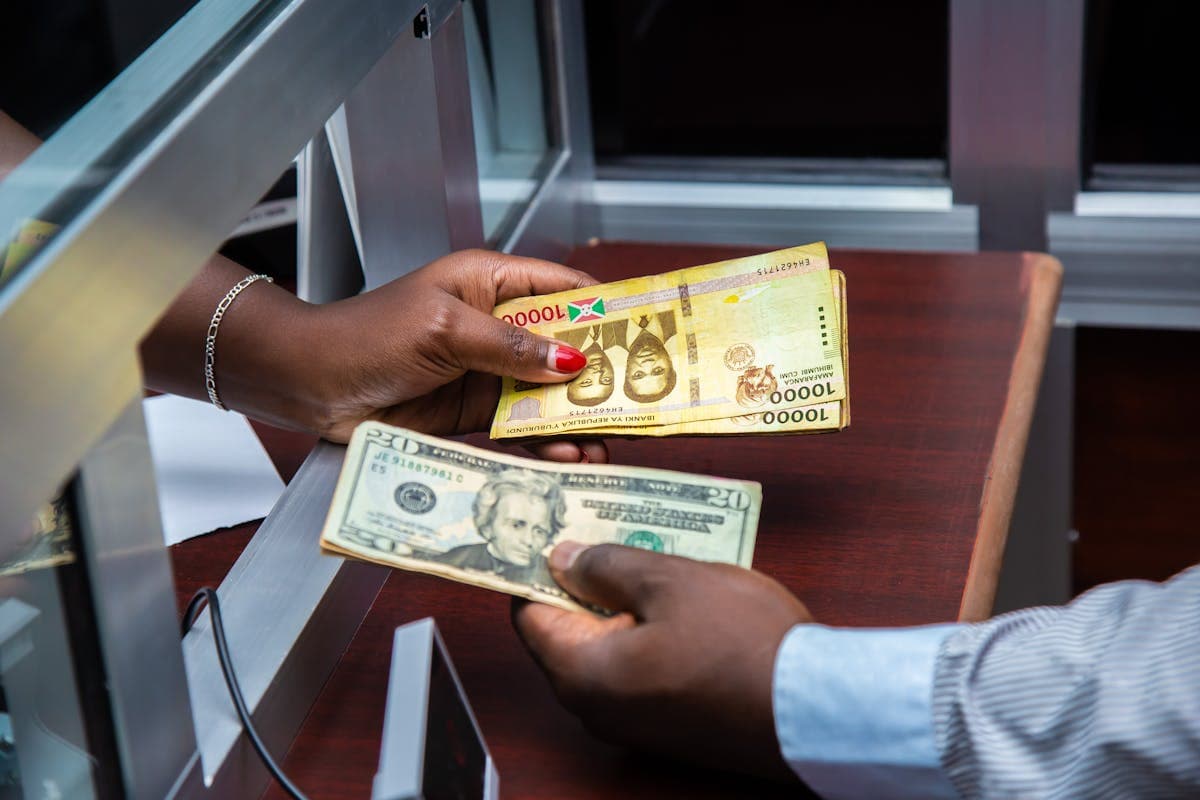
Understanding Exchange Rate Movements
Exchange rates move based on economic fundamentals, interest rates, political events, and market sentiment. While predicting short-term movements is notoriously difficult (even professional currency traders have a hard time beating random chance), understanding the drivers helps you make better timing decisions:
Interest rate differentials. When a country's central bank raises interest rates, its currency typically strengthens because higher rates attract foreign investment seeking better returns. The US Federal Reserve, European Central Bank, and Bank of Japan decisions are the biggest movers.
Inflation. Higher inflation weakens a currency over time because each unit buys less. Countries with persistently high inflation see their currencies depreciate against those with lower inflation.
Trade balances. Countries that export more than they import have demand for their currency (buyers need it to pay for exports), which strengthens it. Countries with large trade deficits see their currencies weaken.
Political stability. Uncertainty (elections, policy changes, geopolitical events) weakens currencies because investors move money to perceived safe havens (USD, CHF, JPY, gold).
Market sentiment. Sometimes currencies move simply because traders expect them to move, creating self-fulfilling prophecies. This is why exchange rates can be volatile around major news events.
For most people, the practical takeaway is: do not try to time the market. Convert when you need the money, use the cheapest service available, and do not stress about getting the absolute best rate. The difference between this week's rate and next week's rate is almost always smaller than the difference between a good service and a bad one.
The Compound Interest Calculator can help you model the long-term cost of holding foreign currency vs converting and investing locally.
Exchange rates move based on economic fundamentals, interest rates, political events, and market sentiment.
Currency Conversion for Online Sellers and Freelancers
If you sell internationally or freelance for clients in other countries, currency conversion is a regular cost of doing business. Here is how to minimize it:
Invoice in your own currency when possible. This shifts the conversion cost and risk to the client. Many international clients accept invoices in USD or EUR even if it is not their local currency.
If you invoice in foreign currency, use a multi-currency account. Receive payment in the client's currency, hold it, and convert when rates are favorable. This is better than converting every invoice individually.
Track conversion costs as a business expense. FX fees and rate margins are deductible business expenses in most jurisdictions. Keep records of the mid-market rate at the time of each conversion to document the cost.
Platforms like PayPal, Stripe, and Shopify have their own conversion rates. PayPal is typically 3-4% above mid-market. Stripe charges 1% for automatic currency conversion. Shopify Payments varies by country. Compare these against receiving in the original currency and converting separately through a specialist service.
Hedging (locking in a future rate) is available through some FX services for large, predictable amounts. If you know you will receive $10,000 USD in 90 days and want to guarantee today's rate, a forward contract does this. This is more relevant for businesses with large recurring international transactions.
The Discount Calculator can help you quickly calculate the effective cost of FX fees as a percentage of the transaction amount, making it easier to compare services.
FAQ
Why is the exchange rate different on my bank app vs Google?
Google shows the mid-market (interbank) rate, which is the rate banks trade at between themselves. Your bank adds a margin (typically 1-3%) to this rate, which is how they earn money on the conversion. The difference is the bank's fee. Compare multiple services to find the smallest margin.
Should I convert money before or during my trip?
For the best rate, use a no-FX-fee credit card during your trip and withdraw small amounts of local cash from ATMs as needed. Pre-ordering a small amount of foreign cash from your bank before departure is useful for initial expenses like taxis and tips. Avoid airport exchange booths.
How do I convert large amounts (over $10,000) at the best rate?
Contact specialist FX services (OFX, Wise Business, Moneycorp) for large transfers. They offer better rates than banks for amounts over $5,000-$10,000, and some offer dedicated dealers who can lock in favorable rates. Also check your bank's premium or business account rates, which may be better than standard retail rates.
Are cryptocurrency exchanges a good way to convert between currencies?
Generally no. While the concept of using crypto as an intermediary (convert USD to BTC, send BTC, convert to EUR) sounds appealing, the transaction fees, spread, and price volatility usually make it more expensive than traditional FX services. Specialist FX services like Wise typically offer lower total costs for standard currency conversions.
### Why is the exchange rate different on my bank app vs Google.
Financial Calculators Explained: Loans, Interest, and VAT
Understand loan amortization, compound interest, and VAT calculations. Includes practical formulas, real examples, and tips for smarter financial decisions.
Unit Conversion Guide: Weight, Length, Temperature & More
How unit conversion works, why metric and imperial systems coexist, and how to convert weight, length, temperature, and data sizes accurately.
Financial Calculators: Loans, Compound Interest & Discounts
How to use financial calculators for loan amortization, compound interest projections, discount analysis, and everyday money decisions that matter.