
The question sounds deceptively simple: how much should I weigh? The honest answer depends on your height, sex, frame size, age, and muscle mass, and different medical formulas will give you different numbers. The term ideal body weight (IBW) entered clinical medicine in the 1960s, originally developed to help doctors calculate safe medication dosages. Today it serves as a reference point for health conversations, fitness goals, and nutrition planning.
This guide explains the four most commonly used IBW formulas, shows you exactly how each one calculates a target weight, and compares them to BMI, a metric you have probably heard of but may not fully understand. It also explains why the number on a scale is only part of the picture, and what body composition measurements are actually predictive of long-term health outcomes.
The Four Most Common Ideal Body Weight Formulas
Medical literature contains dozens of IBW formulas developed over the past 60 years. Four appear in clinical practice most often.
Devine Formula (1974)
The most widely cited formula in clinical and pharmaceutical settings:
- Men: 50 kg + 2.3 kg for every inch over 5 feet
- Women: 45.5 kg + 2.3 kg for every inch over 5 feet
Example (5 ft 10 in male): 50 + (2.3 × 10) = 73 kg (160.6 lbs)
Hamwi Formula (1964)
The oldest of the four, originally developed for patients with diabetes:
- Men: 106 lbs + 6 lbs for every inch over 5 feet
- Women: 100 lbs + 5 lbs for every inch over 5 feet
Example (5 ft 10 in male): 106 + (6 × 10) = 166 lbs (75.3 kg)
Robinson Formula (1983)
A revision of the Devine formula with a slightly different multiplier:
- Men: 52 kg + 1.9 kg per inch over 5 feet
- Women: 49 kg + 1.7 kg per inch over 5 feet
Example (5 ft 10 in male): 52 + (1.9 × 10) = 71 kg (156.5 lbs)
Miller Formula (1983)
The lightest of the four, producing the lowest IBW estimates:
- Men: 56.2 kg + 1.41 kg per inch over 5 feet
- Women: 53.1 kg + 1.36 kg per inch over 5 feet
Example (5 ft 10 in male): 56.2 + (1.41 × 10) = 70.3 kg (154.9 lbs)
What the Spread Tells You
For the same 5 ft 10 in male, the four formulas produce estimates ranging from 154.9 to 166 lbs. This 11-pound spread is not a flaw. It reflects the reality that no single ideal weight exists for every person at a given height. Use these formulas as a range, not a fixed target number.

IBW vs BMI: What Is the Difference?
Both IBW and BMI (Body Mass Index) attempt to define healthy weight ranges, but they approach the problem differently.
IBW gives you a single target weight based purely on your height and sex, ignoring your current weight entirely.
BMI divides your current weight (in kg) by your height squared (in m²) and places you in a category:
| BMI Range | Category | |-----------|----------| | Below 18.5 | Underweight | | 18.5-24.9 | Normal weight | | 25-29.9 | Overweight | | 30 and above | Obese |
Where Each Method Falls Short
Both metrics ignore muscle mass, which is their most significant shared limitation. A professional athlete carrying 15 extra pounds of muscle will appear overweight on BMI charts and well above their IBW, despite being in excellent health. Conversely, a sedentary person at their IBW with very low muscle mass and high body fat can have poor metabolic health despite appearing lean on paper.
Neither IBW nor BMI is a diagnostic tool. They are screening measurements that flag when further investigation might be warranted, not verdicts on your overall health.
For a more complete picture, combine BMI with a body fat percentage measurement. The macro calculator can then help you understand how your weight goal maps to your nutritional needs.
Both IBW and [BMI (Body Mass Index)](/tools/bmi-calculator) attempt to define healthy weight ranges, but they approach the problem differently.
Healthy Weight Ranges by Height
Rather than chasing a single number, aim for the range suggested by the four formulas. The table below shows approximate healthy weight ranges for medium-frame adults, centered on the Devine formula midpoint with ±10% as the boundary:
| Height | Healthy Range (lbs) | Healthy Range (kg) | |--------|--------------------|-----------------| | 5 ft 0 in | 97-118 | 44-53.5 | | 5 ft 2 in | 104-127 | 47-57.6 | | 5 ft 4 in | 110-135 | 50-61.2 | | 5 ft 6 in | 117-143 | 53-64.9 | | 5 ft 8 in | 125-152 | 56.7-69 | | 5 ft 10 in | 132-161 | 59.9-73 | | 6 ft 0 in | 140-171 | 63.5-77.6 | | 6 ft 2 in | 148-181 | 67.1-82.1 |
Ranges shown are for adults aged 18+. These are population-level reference ranges, not individual prescriptions.
Frame Size Adjustments
Most IBW formulas were designed for medium-frame individuals. Adjust your estimate based on frame size:
- Small frame: subtract 10% from the IBW estimate
- Large frame: add 10% to the IBW estimate
A quick way to estimate frame size: wrap your thumb and index finger around the smallest part of your wrist. If they overlap, you likely have a small frame. If they just touch, medium frame. If there is a gap, large frame.
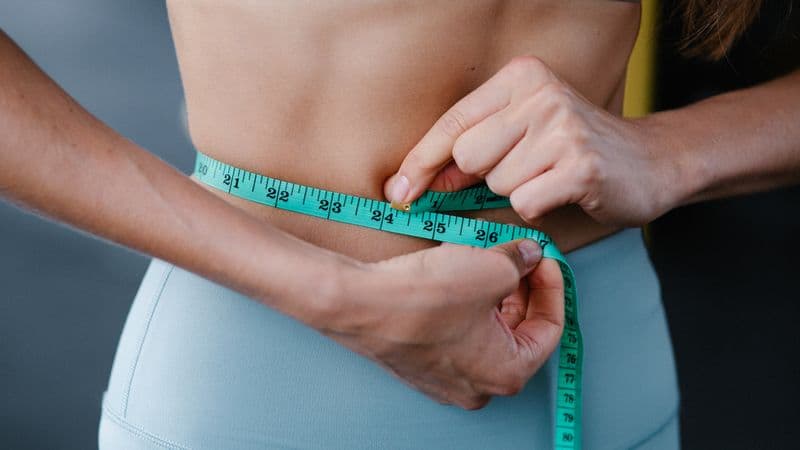
From Target Weight to a Calorie Plan
Once you have an IBW target, the next practical step is calculating how many calories you need to reach or maintain it. Two numbers drive this calculation:
- Basal Metabolic Rate (BMR): the calories your body burns at complete rest
- Total Daily Energy Expenditure (TDEE): BMR multiplied by an activity level multiplier
Use the calorie calculator to compute both numbers instantly. It uses the Mifflin-St Jeor equation, currently the most accurate BMR formula for most adults, and outputs how many calories to eat daily based on your specific goal.
Practical Calorie Targets
- To lose 1 lb per week: eat approximately 500 calories below your TDEE daily
- To lose 0.5 lb per week: eat approximately 250 calories below your TDEE daily
- To maintain your current weight: eat at your TDEE
- To gain lean muscle: eat 200-350 calories above your TDEE daily
For most people targeting their IBW from an overweight starting point, a 300-500 calorie daily deficit produces 0.5-1 lb of fat loss per week without triggering the hormonal adaptations that make further weight loss progressively harder.
Once you have an IBW target, the next practical step is calculating how many calories you need to reach or maintain it.
Frequently Asked Questions
Is ideal body weight the same as a healthy weight?
Not exactly. IBW is a clinical reference point originally developed for medication dosage calculations, not a medical definition of health. The healthy weight range recognized by most health organizations corresponds to a BMI of 18.5-24.9, which is typically wider than what IBW formulas suggest. Think of IBW as one data point among several, not a single correct target.
Do these formulas work for athletes and muscular people?
No, this is the most significant limitation of all IBW formulas. They account only for height and sex, ignoring muscle mass and body composition entirely. A highly muscular person may appear well above their IBW while having very low body fat and excellent metabolic health. For athletic individuals, body fat percentage is a far more meaningful measurement than IBW or BMI.
Should I use kilograms or pounds?
The Devine and Robinson formulas use kilograms; the Hamwi formula uses pounds. Use whichever you prefer. To convert: multiply pounds by 0.4536 to get kilograms, or multiply kilograms by 2.205 to get pounds.
At what age do ideal weight ranges change?
The formulas above apply to adults aged 18-65. For children and teenagers, use growth percentile charts rather than IBW formulas, they account for the wide variation in growth rates at different ages. For adults over 65, some clinicians allow for a slightly higher weight due to the protective role that modest fat reserves play in older adults.
What if I am already within the IBW range?
Focus on body composition rather than the scale. Use the macro calculator to ensure you are hitting adequate protein intake (typically 0.7-1 g per pound of bodyweight) to preserve muscle mass. Combine this with the calorie calculator to dial in your maintenance intake. Being at the right weight is a starting point, having the right body composition is the actual goal.
Images by Pexels
Sleep Calculator: Find Your Ideal Bedtime
Use a sleep calculator to find your ideal bedtime from sleep cycles. Learn how 90-minute cycles work, why waking mid-cycle makes you groggy, and how to fix it.
How Much Water Should You Drink? A Science-Based Guide
Calculate daily water intake based on weight, activity, and climate. Practical hydration tips backed by research, not the eight-glasses-a-day myth.
BMR and TDEE Calculator: Find Your Daily Calorie Needs
Learn what BMR and TDEE mean, how to calculate them with the Mifflin-St Jeor and Harris-Benedict formulas, and how to set calorie targets that work.
Heart Rate Zones: Calculate Your Target Training Zones
Calculate target heart rate zones for training. Apply the Karvonen formula, set zone-based training intensities, and get more from each cardio workout.