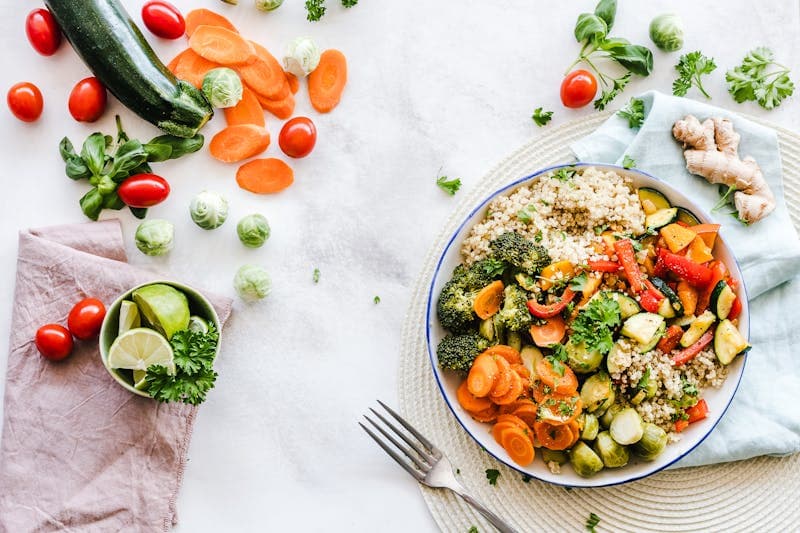
Counting calories tells you how much to eat. Counting macros tells you what to eat. Both matter, but macros give you more control over how your body uses the food you consume.
Macronutrients are the three categories of nutrients that provide energy: protein, carbohydrates, and fat. Each gram of protein provides 4 calories, each gram of carbohydrate provides 4 calories, and each gram of fat provides 9 calories. Two people eating 2,000 calories per day can have completely different body compositions depending on how those calories are distributed across the three macros.
Calculating your ideal macro split is not complicated once you know the steps. You start with your total calorie target, decide on a ratio based on your goals, and then convert those percentages into grams. This guide walks through the entire process with real numbers.
Step 1: Find Your Daily Calorie Target
Before you can split calories into macros, you need to know your total daily calorie expenditure (TDEE). This is the number of calories your body burns in a day, accounting for your basal metabolic rate plus physical activity.
The most widely used formula is the Mifflin-St Jeor equation:
For men: BMR = (10 x weight in kg) + (6.25 x height in cm) - (5 x age) + 5 For women: BMR = (10 x weight in kg) + (6.25 x height in cm) - (5 x age) - 161
Multiply your BMR by an activity factor: - Sedentary (desk job, no exercise): BMR x 1.2 - Lightly active (exercise 1-3 days/week): BMR x 1.375 - Moderately active (exercise 3-5 days/week): BMR x 1.55 - Very active (exercise 6-7 days/week): BMR x 1.725
The result is your TDEE. To lose weight, eat 300 to 500 calories below TDEE. To gain muscle, eat 200 to 400 calories above TDEE. To maintain, eat at TDEE.
The Calorie Calculator handles this math automatically. Enter your stats, select your activity level, and it gives you the daily calorie target for your goal.

Step 2: Choose Your Macro Ratio
Your macro ratio depends on your primary goal. Here are the most evidence-based starting points:
Weight loss (fat loss while preserving muscle): 40% protein, 30% carbs, 30% fat. The high protein intake prevents muscle loss during a calorie deficit and keeps you feeling full longer. Research consistently shows that higher protein diets produce better body composition outcomes during weight loss.
Muscle gain (bulking): 30% protein, 45% carbs, 25% fat. The higher carb intake fuels intense training sessions and supports recovery. Carbs replenish muscle glycogen, which is your body's primary fuel source during resistance training.
Maintenance (general health): 30% protein, 40% carbs, 30% fat. A balanced split that supports moderate activity without prioritizing any specific outcome.
Endurance athletes: 25% protein, 55% carbs, 20% fat. Endurance sports like running, cycling, and swimming burn through carbohydrates at high rates. These athletes need significantly more carbs than the general population.
Ketogenic (therapeutic or performance): 20% protein, 5-10% carbs, 70-75% fat. This extreme ratio forces the body to use fat as its primary fuel source. It is effective for specific goals but difficult to sustain and not necessary for most people.
Use the Percentage Calculator to convert these ratios into actual calorie numbers from your TDEE.
Your macro ratio depends on your primary goal.
Step 3: Convert Percentages to Grams
Here is a worked example. Say your TDEE is 2,200 calories and you are aiming for fat loss with a 40/30/30 split at a 400-calorie deficit. Your daily target is 1,800 calories.
Protein (40% of 1,800 = 720 calories): 720 calories divided by 4 calories per gram = 180 grams of protein per day.
Carbohydrates (30% of 1,800 = 540 calories): 540 calories divided by 4 calories per gram = 135 grams of carbs per day.
Fat (30% of 1,800 = 540 calories): 540 calories divided by 9 calories per gram = 60 grams of fat per day.
So your daily targets are: 180g protein, 135g carbs, 60g fat, totaling 1,800 calories.
To put those numbers in perspective: 180g of protein is roughly equivalent to two chicken breasts, a scoop of whey protein, a cup of Greek yogurt, and three eggs over the course of a day. 135g of carbs is about two cups of cooked rice, a banana, and a sweet potato. 60g of fat is about two tablespoons of olive oil, a handful of almonds, and whatever fat comes naturally in your protein sources.
These numbers are starting points. Track your intake for two weeks, monitor your weight and energy levels, and adjust. If you are losing weight too fast (more than 1 percent of body weight per week), add 100 to 200 calories. If you are not losing weight, reduce by the same amount.
Practical Meal Planning With Macros
Knowing your macro targets is useless if you cannot translate them into actual meals. Here is a practical framework.
Build each meal around a protein source first. Protein is the hardest macro to hit because most convenient foods are carb-heavy or fat-heavy. Plan your protein deliberately, and the other macros tend to fall into place.
A simple template for each meal: - One protein source: chicken, fish, eggs, Greek yogurt, tofu, legumes - One carb source: rice, potatoes, oats, bread, fruit, pasta - One fat source: olive oil, nuts, avocado, cheese, butter - Vegetables: unlimited, they add negligible calories but significant volume and nutrients
For a three-meal day hitting the targets from our example (180g protein, 135g carbs, 60g fat):
Breakfast: 3 eggs (18g protein, 15g fat) + 1 cup oatmeal (5g protein, 27g carbs) + 1 banana (27g carbs)
Lunch: 200g chicken breast (46g protein) + 1 cup rice (45g carbs, 0.5g fat) + 1 tbsp olive oil (14g fat) + vegetables
Dinner: 200g salmon (40g protein, 12g fat) + 1 medium sweet potato (26g carbs) + salad with vinaigrette (5g fat)
Snack: 1 scoop whey protein (25g protein) + 1 cup Greek yogurt (15g protein, 10g carbs) + handful almonds (14g fat)
That adds up to approximately 149g protein, 135g carbs, 60g fat. Close enough. Perfection is not the goal. Consistency within 10 percent of your targets is what matters.

Common Mistakes When Tracking Macros
Not weighing food: Eyeballing portions is wildly inaccurate. A "tablespoon" of peanut butter varies from 10 to 25 grams depending on how generously you scoop. A kitchen scale costs $15 and removes all guesswork.
Ignoring cooking oils: Two tablespoons of olive oil adds 240 calories and 28 grams of fat. If you cook your chicken in oil but only log the chicken, your fat intake is higher than you think.
Obsessing over daily targets: Your body does not reset at midnight. A day where you eat 200g protein and a day where you eat 160g protein average out to 180g. Weekly averages matter more than daily perfection. Stressing over exact daily numbers leads to an unhealthy relationship with food.
Choosing protein supplements over real food: Whey protein is convenient, but it does not have the micronutrients, fiber, and satiety of whole food protein sources. Use supplements to fill gaps, not as your primary protein source.
Neglecting fiber: Macro tracking focuses on protein, carbs, and fat, but fiber intake matters for digestive health and satiety. Aim for 25 to 35 grams of fiber per day from vegetables, fruits, legumes, and whole grains. Most people who track macros under-eat fiber because they optimize for hitting their carb target with low-fiber sources like white rice and bread.
Check your BMI alongside your macro tracking using the BMI Calculator to make sure your weight management approach aligns with healthy ranges for your height.
When to Adjust Your Macros
Your macro targets are not permanent. As your body changes, your needs change.
After losing 10 or more pounds, recalculate your TDEE. A lighter body burns fewer calories at rest, so your calorie target decreases. Your protein target in grams may stay the same, but the percentage of total calories from protein increases as total calories go down.
When switching from cutting to maintaining or bulking, shift carbs upward first. Adding 50 to 100 grams of carbs per day gives you more training energy without significantly affecting fat storage. Increase calories gradually over two to three weeks rather than jumping straight to your new target.
If your energy levels are consistently low despite adequate sleep, your carbs might be too low. Endurance activities and high-volume resistance training require more glycogen than a standard moderate-carb diet provides.
If you are gaining weight but not getting stronger, your calorie surplus is too large or your protein is too low. Tighten the surplus to 200 to 300 calories above TDEE and make sure protein stays above 1.6 grams per kilogram of body weight.
Seasonal changes matter too. Most people are more active in summer and less active in winter. Adjust your activity multiplier accordingly, which changes your TDEE and therefore your macro targets.
Your macro targets are not permanent.
FAQ
How much protein do I really need per day?
For general health, 0.8 grams per kilogram of body weight is the minimum recommendation. For muscle building or fat loss, 1.6 to 2.2 grams per kilogram is well-supported by research. For a 75 kg person, that translates to 120 to 165 grams per day. More than 2.2 grams per kilogram has not shown additional benefits in studies.
Do I need to track macros forever?
No. Most people track strictly for 3 to 6 months to learn what balanced eating looks like, then switch to intuitive eating based on the habits they built. Once you know that a chicken breast has about 45g of protein and a cup of rice has about 45g of carbs, you can estimate portions without logging every meal.
Are all carbs the same for macro tracking purposes?
For calorie counting purposes, yes. A gram of sugar and a gram of whole grain oats both provide 4 calories. But for health, no. Complex carbs (oats, sweet potatoes, legumes) provide fiber, sustained energy, and better satiety than simple carbs (sugar, white bread, juice). Prioritize complex carbs within your carb target.
Can I eat whatever I want if it fits my macros?
Technically yes, practically no. You could hit 180g of protein entirely from protein shakes and 135g of carbs entirely from candy, but you would miss essential micronutrients, fiber, and phytochemicals. The "if it fits your macros" approach works best when 80 percent of your food comes from nutrient-dense whole foods and 20 percent comes from whatever you enjoy.
Free Health Calculators: BMI, Calories, Water Intake
Health calculators for BMI, daily calories, water intake, and sleep cycles. Free tools that give you real numbers to work with instead of guesses.
Sleep Calculator: Find Your Ideal Bedtime
Use a sleep calculator to find your ideal bedtime from sleep cycles. Learn how 90-minute cycles work, why waking mid-cycle makes you groggy, and how to fix it.
Heart Rate Zones: Calculate Your Target Training Zones
Calculate target heart rate zones for training. Apply the Karvonen formula, set zone-based training intensities, and get more from each cardio workout.