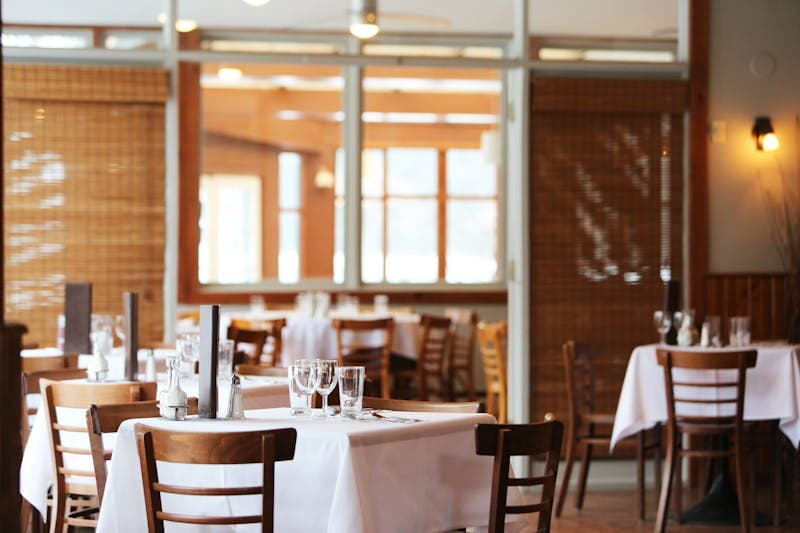
The check arrives. Everyone pulls out their phones. Someone says "let's just split it evenly," and the person who only had a salad winces. Someone else tries to calculate 18% of $127.43 in their head and gets a different number than the person across the table. The whole process takes longer than dessert.
This scene plays out millions of times a day, and the math is simple. The problem is not that people cannot calculate percentages. The problem is that people are bad at math when they are distracted by conversation, half full, and slightly anxious about over-tipping or under-tipping.
A Tip Calculator removes the awkwardness. Enter the bill total, choose a tip percentage, set how many people are splitting, and get the exact per-person amount. It takes five seconds and skips the moment where someone silently wonders whether the person who "did the math" overcharged them.
Tipping Percentages: What Is Actually Expected
Tipping customs vary dramatically by country, but the United States sets the baseline that most English-language tipping advice centers on.
United States: 15% to 20% is standard for sit-down restaurants. 20% has become the new default in most cities. Anything below 15% signals dissatisfaction with the service. For takeout, 10% to 15% is common but not universally expected. For delivery, 15% to 20% is standard, with a minimum of $3 to $5 for small orders.
Canada: Similar to the US. 15% to 20% is standard. Tipping culture closely mirrors American norms.
United Kingdom: 10% to 12.5% is standard. Some restaurants add a service charge automatically, in which case additional tipping is optional. Check the receipt before adding more.
Europe (mainland): Tipping is appreciated but not obligatory in most countries. Rounding up the bill or leaving 5% to 10% is common. In some countries like Japan, tipping is actually considered rude.
Australia and New Zealand: No tipping expected at restaurants. Wages for service workers are higher, and the price you see on the menu is the price you pay.
Use a Percentage Calculator if you need to quickly figure out what a specific percentage of any amount is. It works for tips, but also for sales tax, discounts, and any other percentage-based calculation.

The Even Split vs. Itemized Split Debate
Splitting a bill evenly is the fastest option, but it is only fair when everyone ordered roughly the same amount. When one person had a $50 steak and three cocktails while another had a $15 pasta and water, the even split creates a subsidy that nobody agreed to.
There are three common approaches:
Even split: Total (including tip) divided by number of people. Best when the group ordered similarly or when the dollar difference is small enough that nobody cares. Among close friends who dine together regularly, this tends to average out over time.
Itemized split: Each person pays for exactly what they ordered, plus their proportional share of the tip and any shared items (appetizers, bottles of wine). This is the fairest method but takes the longest to calculate.
Hybrid approach: Everyone pays for their own entrees and drinks, and shared items (appetizers, desserts, table wine) are split evenly. This captures the big differences while avoiding the tedium of accounting for every breadstick.
The Tip Calculator handles the even-split scenario cleanly. For itemized splits, you would need to calculate each person's subtotal, then apply the tip percentage to each subtotal individually. A Calculator works for the manual arithmetic if you prefer itemized fairness.
Splitting a bill evenly is the fastest option, but it is only fair when everyone ordered roughly the same amount.
When to Tip More Than the Standard Amount
There are situations where tipping above the standard 20% is warranted, and recognizing them is part of being a decent patron.
Large groups: Serving a table of 10 is substantially harder than serving a table of 2. Many restaurants automatically add an 18% to 20% gratuity for parties of 6 or more. If yours does not, tip at the higher end of the range or above.
Complex orders: If your group made a dozen modifications, sent things back, or ordered courses at different times, the server worked harder than usual. Acknowledge that.
Holiday dining: Working on Thanksgiving, Christmas Eve, or New Year's means the server is missing their own celebrations. Tipping 25% to 30% on holidays is a common practice among regular diners.
Exceptional service: If the server went above and beyond (caught an allergy issue, accommodated a last-minute seating change, handled a difficult situation with grace), a larger tip is the most direct way to say thank you.
Small bills: If you sat at a table for two hours nursing a $12 coffee, the tip should reflect the time and real estate you used, not the dollar amount of what you ordered. A $3 tip on a $12 bill is technically 25%, but the server earned more than that by giving up the table for two hours.

Handling Awkward Tipping Situations
Bad service: A common question is whether you should still tip for poor service. In the US, the answer is usually yes, but less. 10% signals that you noticed the service was lacking without stiffing the server entirely. If the problem was the kitchen (slow food, wrong order), not the server, tip normally. Servers do not cook the food.
Automatic gratuity already included: Check the bottom of your receipt. If a service charge or gratuity is already added, you are not expected to tip on top of it. You can leave a small additional amount if the service was excellent, but there is no obligation.
Buffets and counter service: For buffets, 10% is standard since someone is still clearing your plates, refilling drinks, and maintaining the setup. For counter service (fast casual, coffee shops, bakeries), tipping is appreciated but entirely optional. The tablet screen asking for 20% at a counter where you pour your own water can be ignored without guilt.
Takeout: Pre-pandemic, tipping on takeout was unusual. Since 2020, many people have started tipping 10% to 15% on takeout orders. It is not mandatory, but it is increasingly common and appreciated by restaurant staff who package your food.
Foreign countries: When in doubt, ask a local or look up tipping customs before your trip. Over-tipping in countries where it is not customary can create awkwardness, and under-tipping in the US can create genuine financial hardship for the server.
**Bad service**: A common question is whether you should still tip for poor service.
The Math Behind Tip Calculations
For the moments when you do not have a calculator handy, there are a few mental math shortcuts:
10% shortcut: Move the decimal point one place to the left. 10% of $85.40 is $8.54. This is your base. Double it for 20%, or add half for 15%.
20% shortcut: Calculate 10% (move the decimal), then double it. 10% of $63.00 is $6.30, so 20% is $12.60.
15% shortcut: Calculate 10% and then add half of that. 10% of $80.00 is $8.00, half of that is $4.00, so 15% is $12.00.
Rounding trick: Round the bill to the nearest easy number before calculating. $78.43 becomes $80. 20% of $80 is $16. You will be within a dollar of the exact amount, and nobody notices the difference.
Per-person shortcut: For an even split among 4 people at 20% tip, each person pays 30% of a quarter of the pre-tip bill. Sounds complicated, but it simplifies to: divide the bill by 4, then multiply by 1.2. For $200 split 4 ways at 20% tip: $200 / 4 = $50, times 1.2 = $60 per person.
Or just use the Tip Calculator and skip the mental gymnastics entirely. Your dinner companions will appreciate the speed and accuracy.
FAQ
Should I tip on the pre-tax or post-tax amount?
Traditionally, tips are calculated on the pre-tax subtotal. In practice, most people calculate based on the total including tax because it is simpler. The difference on a typical restaurant bill is a dollar or two. Neither approach is wrong.
What percentage should I tip for delivery orders?
For food delivery, 15% to 20% is standard in the US, with a minimum of $3 to $5 for small orders. The driver is using their own vehicle, gas, and time. For large or heavy orders, tip toward the higher end.
Is it okay to leave a zero tip?
Leaving zero is generally considered inappropriate in the US, where servers rely on tips for a significant portion of their income. If the service was genuinely terrible, leaving 10% with a note to the manager is a more constructive approach. In countries where service charges are included or tipping is not customary, leaving nothing is perfectly normal.
How do I calculate tip for a group with some people paying cash and others with cards?
Have one person put the entire bill (including tip) on their card, and have the cash-paying members give their share (including their portion of the tip) directly to that person. This avoids the confusion of splitting the check at the register and ensures the server gets one clean tip amount.
### Should I tip on the pre-tax or post-tax amount.
Financial Calculators Explained: Loans, Interest, and VAT
Understand loan amortization, compound interest, and VAT calculations. Includes practical formulas, real examples, and tips for smarter financial decisions.
Unit Conversion Guide: Weight, Length, Temperature & More
How unit conversion works, why metric and imperial systems coexist, and how to convert weight, length, temperature, and data sizes accurately.
Financial Calculators: Loans, Compound Interest & Discounts
How to use financial calculators for loan amortization, compound interest projections, discount analysis, and everyday money decisions that matter.