Your electric bill shows what you owe, not where the money went. Air conditioning? The old fridge? The gaming PC that runs 12 hours a day? Without per-appliance numbers, every cut is a guess.
The math is one line: watts × hours of use ÷ 1,000 = kilowatt-hours (kWh). Multiply by your rate per kWh (printed on your bill, usually $0.10 to $0.30) and you have the monthly cost.
Wattage shows up on a sticker, a label, or in the manual, but the units vary. The Unit Converter handles watts, kilowatts, amps, and BTUs in one place so the formula above always works.
Cost Per Appliance at $0.15/kWh
Cost = (Watts × Hours per day × Days per month) ÷ 1,000 × Rate per kWh
Monthly cost for common loads at $0.15/kWh:
- Refrigerator (150W, 24/7): 150 × 24 × 30 ÷ 1,000 × $0.15 = $16.20
- Central AC (1,500W, 8 h/day, summer): $54.00
- LED bulb (10W, 6 h/day): $0.27
- Gaming PC (300W, 4 h/day): $5.40
- Electric heater (1,500W, 6 h/day, winter): $40.50
- Washing machine (500W, 1 h/day): $2.25
The number most people miss: heating and cooling dwarf everything else. One space heater or window AC costs more per month than every light, charger, and small appliance in the house combined.
Once you have the per-appliance numbers, the Percentage Calculator tells you what slice each one is taking from the total bill. Fix the largest slice first.

What Is Actually on Your Bill
The bill is more than kWh × rate. Five line items hide in there:
Usage charge: kWh × rate. The only line you control directly.
Fixed charges: a $5 to $20 monthly base fee for grid access and metering. Paid even if you generate no usage.
Demand charges (some plans): tied to your highest 15-minute draw of the month. Running the dryer, oven, and AC at the same hour can spike this past a normal week of usage.
Time-of-use rates: peak hours (about 2pm to 8pm) cost 2 to 3× off-peak (10pm to 6am). Moving the dishwasher to 10pm cuts that cycle by half or more.
Tiered rates: the first 500 kWh might cost $0.10/kWh and anything above 1,000 kWh jumps to $0.20/kWh. Heavy users get punished harder than the formula suggests.
Taxes and surcharges: local taxes, renewable program fees, regulatory fees. Not controllable, but they explain why the bill is bigger than your raw usage.
If the bill shows time-of-use windows, shifting big loads to off-peak hours is the cheapest win on this list.
The bill is more than kWh × rate.
Where the Real Savings Live
Order matters. Fix the largest line first.
HVAC efficiency (saves 20-40% of bill): swap or clean filters monthly, seal window and door leaks, push the thermostat 2°F higher in summer and 2°F lower in winter. A programmable thermostat alone saves 10-15% on heating and cooling.
Water heating (saves 10-15%): drop the tank from 140°F to 120°F, install low-flow showerheads, wash clothes in cold water, insulate exposed hot pipes.
Lighting (saves 5-10%): replace every incandescent and CFL with LED. LEDs draw 75% less and last 25× longer. A 30-bulb house saves $100-$200 a year on the switch.
Phantom loads (saves 5-10%): TVs, consoles, chargers, and cable boxes pull power while "off." A typical home leaks $100-$200 a year. Smart power strips cut the leak on a schedule.
Appliance upgrades: a 15-year-old fridge replaced with an Energy Star model saves about $100 a year; swapping a window AC for a heat pump saves more. Payback usually runs 2-5 years.
The Compound Interest Calculator lets you push those monthly savings into a real number over five or ten years, which is the only honest way to judge whether an upgrade pays for itself.
Smart Home Hardware Worth Installing
Hardware automates the rules above.
Smart thermostats (Nest, Ecobee) learn your schedule, drop heating and cooling when you leave, and many utilities subsidize the install.
Smart plugs and power strips track per-appliance draw and cut power on a schedule. Even the monitoring data alone tells you where the leak is.
Smart lighting: turn off lights for empty rooms, dim where you can (50% dim = about 40% less energy with LEDs), put motion sensors in bathrooms and closets.
Energy monitors (Sense, Emporia Vue) clip onto the breaker panel and report whole-home draw in real time. Some identify individual appliances by their signature, which is how you find the 200W idle load you forgot about.
Smart water heaters (or a timer in front of a dumb tank) heat before peak windows and coast through the expensive hours.
A $200 to $500 starter setup typically cuts 15 to 25% off the bill and pays for itself in one to two years.

FAQ
How much does it cost to run an electric car?
At $0.15/kWh and 30 kWh per 100 miles, an EV costs about $4.50 per 100 miles to charge at home. A 30 MPG gas car at $3.50/gallon costs about $11.67 for the same distance. The EV is roughly 60% cheaper per mile but adds $50 to $100 to the monthly electric bill, depending on how much you drive.
Do solar panels eliminate my electric bill?
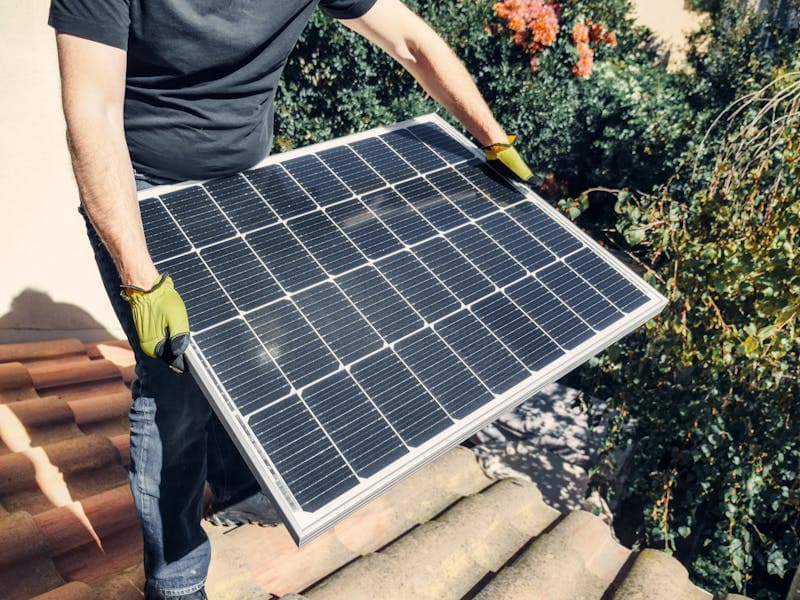
Rarely fully. A properly sized system offsets 80 to 100% of usage, but the utility still bills $5 to $20 in fixed charges. Net metering credit varies by state and utility. Add a battery for peak-hour offset and outage backup, at the cost of a longer payback.
Is it cheaper to run appliances at night?
Only on a time-of-use plan. On a flat rate, the hour does not change the price. On time-of-use, moving laundry, the dishwasher, or EV charging past 9pm or 10pm cuts those loads by 30 to 50%.
Which appliance uses the most electricity?
HVAC, by a wide margin. Heating and cooling are 40-50% of the typical bill, water heating is 15-20%, and everything else (lights, appliances, electronics) splits the remaining 30-40%.
Wedding Budget Calculator: Plan the Day Without the Debt
Wedding budget calculator with real cost ranges by category, per-guest math, vendor payment timeline, and the spending traps that push couples into debt.
Personal Budget Spreadsheet: A System That Sticks
Build a personal budget spreadsheet you will actually use. The 50/30/20 rule, expense tracking formulas, and a 15-minute weekly check-in routine.
Currency Converter: How Live Exchange Rates Work
See how currency exchange rates work, where to find accurate live rates, and how to avoid the hidden fees when you convert money for travel or business.
Free Online Calculators for Everyday Math and Finance
Free online calculators for percentages, discounts, VAT, compound interest, and unit conversion. Instant results in your browser, no sign-up needed.