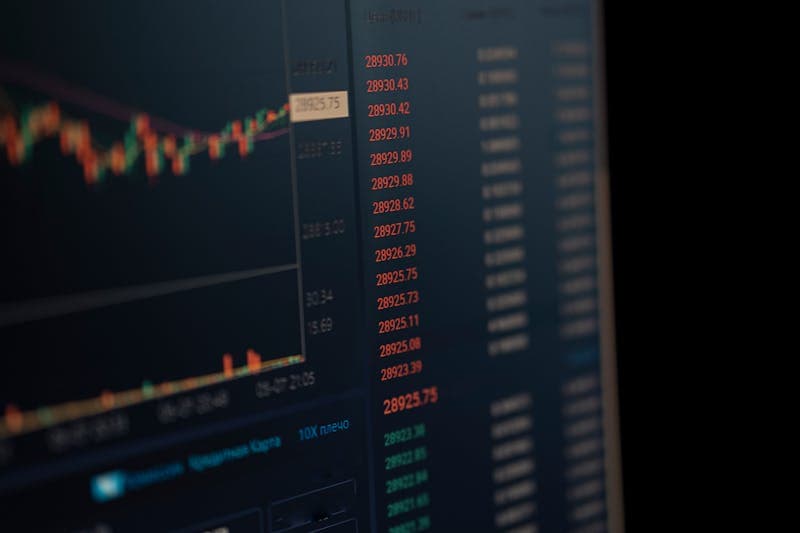
The foreign exchange market is the largest financial market in the world. Over $7 trillion changes hands every single day. That is more than the combined daily volume of every stock exchange on the planet.
Despite its size, forex trading remains mysterious to most people. Stocks are intuitive: you buy a piece of a company, the company grows, your shares become worth more. Forex is different. You are not buying a company. You are trading one currency against another, betting that one will strengthen relative to the other.
Understanding the basics of currency pairs, exchange rates, and how they move is useful even if you never place a forex trade. If you travel internationally, send money abroad, run an import/export business, or invest in foreign stocks, exchange rates affect your finances directly.
How Currency Pairs Work
In forex, currencies are always traded in pairs. You cannot simply "buy euros." You buy euros with another currency, selling that currency in the process.
A currency pair like EUR/USD (euro vs US dollar) has two parts:
- Base currency (first): EUR
- Quote currency (second): USD
The exchange rate tells you how much of the quote currency you need to buy one unit of the base currency. If EUR/USD = 1.0850, you need 1.0850 US dollars to buy 1 euro.
When you "go long" on EUR/USD, you are buying euros and selling dollars. You profit if the euro strengthens against the dollar (the rate goes up). When you "go short," you sell euros and buy dollars, profiting if the euro weakens (the rate goes down).
The Forex Converter lets you quickly convert between major currency pairs using current exchange rates. This is useful for understanding what a rate change actually means in real money terms.
Major, Minor, and Exotic Pairs
Currency pairs are grouped by trading volume and liquidity.
Major pairs all include the US dollar and account for about 75% of forex trading volume: - EUR/USD (Euro/Dollar) - most traded pair globally - USD/JPY (Dollar/Yen) - GBP/USD (Pound/Dollar) - USD/CHF (Dollar/Swiss Franc) - AUD/USD (Dollar/Australian Dollar) - USD/CAD (Dollar/Canadian Dollar) - NZD/USD (Dollar/New Zealand Dollar)
Majors have the tightest spreads (lowest trading costs) and the most liquidity, meaning large orders do not significantly move the price.
Minor pairs (also called cross pairs) do not include the US dollar: - EUR/GBP, EUR/JPY, GBP/JPY, AUD/JPY
These are liquid but have slightly wider spreads than majors.
Exotic pairs combine a major currency with a currency from a smaller economy: - USD/TRY (Dollar/Turkish Lira), USD/ZAR (Dollar/South African Rand)
Exotics have much wider spreads, lower liquidity, and higher volatility. They can move dramatically in response to political events, interest rate decisions, or economic crises in the smaller economy.
For everyday currency needs like travel or international transfers, the Currency Converter handles all major and many minor currency pairs.
What Moves Exchange Rates
Exchange rates are driven by supply and demand for each currency. Several factors influence this:
Interest rate differentials. When a country's central bank raises interest rates, its currency tends to strengthen because higher rates attract foreign investment seeking better returns. The interest rate spread between two countries is one of the strongest predictors of currency movement.
Economic data. GDP growth, employment figures, inflation rates, and trade balance data all influence currency values. Strong economic data typically strengthens a currency because it suggests the country is a good place to invest.
Central bank policy. Beyond interest rates, central banks influence currencies through quantitative easing (buying bonds, which increases money supply and weakens the currency) and forward guidance (signaling future policy intentions).
Geopolitical events. Elections, trade wars, military conflicts, and political instability can cause dramatic currency movements. Safe haven currencies (USD, JPY, CHF) tend to strengthen during global uncertainty.
Market sentiment and speculation. Large institutional traders, hedge funds, and algorithmic trading systems can move currencies based on technical analysis, positioning, and momentum. In the short term, speculation can drive rates away from fundamental values.
Trade flows. Countries that export more than they import tend to have stronger currencies because foreign buyers must purchase the exporting country's currency to pay for goods. This is why commodity currencies (AUD, CAD, NZD) often correlate with commodity prices.
Pips, Lots, and Leverage: The Mechanics of Forex Trading
If you decide to trade forex, three concepts are essential:
A pip is the smallest standard price movement in a currency pair. For most pairs, it is the fourth decimal place: a move from 1.0850 to 1.0851 is one pip. For yen pairs (which use two decimal places), a pip is the second decimal place.
One pip on a standard lot of EUR/USD is worth about $10. On a mini lot, it is $1. On a micro lot, it is $0.10.
Lot sizes determine how much currency you are actually trading: - Standard lot: 100,000 units of the base currency - Mini lot: 10,000 units - Micro lot: 1,000 units
Leverage lets you control a large position with a small amount of capital. At 50:1 leverage, a $2,000 deposit controls a $100,000 position. This amplifies both profits and losses. A 1% move in your favor returns 50% on your deposit. The same move against you costs 50%.
Leverage is the single biggest reason retail forex traders lose money. The ability to control large positions with small capital creates the illusion that forex is a fast path to wealth. In reality, most retail forex traders lose money over time, and leverage accelerates those losses.
If you are interested in cryptocurrency trading, the mechanics are similar but the markets operate 24/7. The Crypto Converter helps you track exchange rates between cryptocurrencies and fiat currencies.
If you decide to trade forex, three concepts are essential: **A pip** is the smallest standard price movement in a currency pair.
Practical Currency Conversion for Non-Traders
Most people encounter foreign exchange not through trading but through travel, international purchases, and money transfers.
Travel money. Airport currency exchange desks typically offer the worst rates, with markups of 5-10% above the interbank rate. Online services, multi-currency debit cards (like Wise, Revolut), and local ATM withdrawals generally offer much better rates, within 0.5-2% of the interbank rate.
Online shopping in foreign currencies. Your credit card company adds a foreign transaction fee (typically 1-3%) plus a markup on the exchange rate. Some cards waive foreign transaction fees entirely, making them significantly cheaper for international purchases.
International money transfers. Traditional bank wire transfers are expensive: flat fees of $25-50 plus unfavorable exchange rates with 2-4% hidden markup. Services like Wise (formerly TransferWise) use the mid-market rate with a transparent fee, often saving 50-80% compared to banks.
Freelancer payments. If you invoice international clients, the currency and timing of conversion matter. Invoicing in a strong currency and converting when rates are favorable can make a meaningful difference in your annual income.
For all these scenarios, knowing the current interbank rate gives you a baseline to evaluate any conversion fee. If the interbank EUR/USD rate is 1.0850 and your bank offers 1.0550, you are paying a 2.8% hidden fee. The Currency Converter shows current rates so you can spot overcharges.
Risks of Forex Trading for Beginners
Forex is heavily marketed to retail traders as an accessible path to financial freedom. The reality is much less glamorous.
Most retail traders lose money. Regulated brokers are required to disclose loss rates. Most report that 65-80% of retail forex accounts lose money. The combination of leverage, emotional trading, and overconfidence in short-term predictions works against most individuals.
The spread is always against you. Every trade starts at a loss because you buy at the ask price and sell at the bid price. The difference (the spread) is the broker's revenue. Even on major pairs with tight spreads, frequent trading accumulates significant spread costs.
24-hour markets create fatigue. Forex trades around the clock from Sunday evening to Friday evening. Major economic releases can happen at any time of day depending on the country. Trading while sleep-deprived is a common mistake.
Demo accounts create false confidence. Trading with fake money does not replicate the psychology of risking real money. Strategies that work on a demo account often fail when real money is on the line because emotions drive different decisions.
The alternative: If you want exposure to currency movements without active trading, holding foreign-currency-denominated ETFs or investing in international index funds gives you currency exposure as a byproduct of stock ownership, with much lower costs and complexity.
Forex is heavily marketed to retail traders as an accessible path to financial freedom.
FAQ
What is the best time to trade forex?
The highest liquidity and tightest spreads occur when major market sessions overlap. The London-New York overlap (8:00 AM to 12:00 PM EST) is the most active period for EUR/USD and GBP/USD. The Tokyo-London overlap (3:00 AM to 4:00 AM EST) is best for JPY pairs. Trading during low-liquidity periods (late Friday, early Sunday) typically means wider spreads and more erratic price movements.
How is forex different from cryptocurrency trading?
Forex trades established national currencies with deep liquidity, regulated brokers, and relatively low volatility. Cryptocurrency trades digital assets with thinner liquidity, less regulation, and much higher volatility. Forex markets are open 5 days a week; crypto markets never close. The fundamental analysis for forex (interest rates, GDP, trade balance) is well-established, while crypto valuation remains more speculative.
Can I make a living from forex trading?
Some people do, but they are a small minority with years of experience, substantial capital, and disciplined risk management. Starting capital of at least $50,000-100,000 is typically needed to generate meaningful income from forex trading while keeping risk per trade at recommended levels (1-2% of capital). Most successful forex professionals work at institutions, not as retail traders.
What is the difference between the buy rate and sell rate at a currency exchange?
The buy rate (bid) is what the exchange will pay you for your foreign currency. The sell rate (ask) is what you pay them. The difference is their profit margin. A EUR/USD interbank rate of 1.0850 might be quoted as buy 1.0650 / sell 1.1050 at an airport exchange. The wider the spread between buy and sell, the worse the deal for you.
Free Online Calculators for Everyday Math and Finance
Free online calculators for percentages, discounts, VAT, compound interest, and unit conversion. Instant results in your browser, no sign-up needed.
Retirement Calculator: How Much You Actually Need to Retire
Estimate your retirement number with practical math. The 4% rule, savings rates, expected investment returns, and how to plan when starting at 25, 35, or 45.
AI Travel Planners: Build Better Itineraries in Less Time
AI travel planners cut trip research from hours to minutes. Compare tools, write better prompts, and build day-by-day itineraries that match your budget.
Currency Exchange Fees: Where the Money Actually Goes
Bank cards, Wise, Revolut, ATMs, airport counters and the DCC question compared on total cost, plus how to measure any markup against the mid-market rate in a minute.