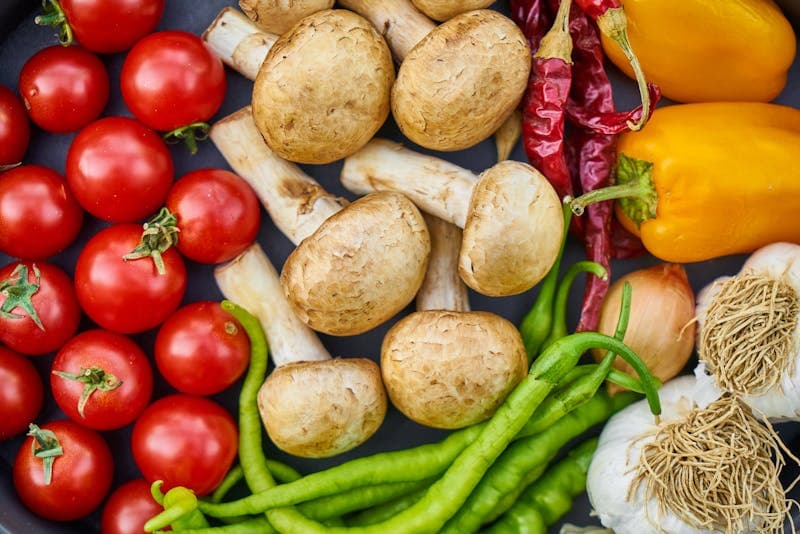
Chicken breast, two bell peppers, half an onion, leftover rice. A web search for that returns fifty blog posts with a life story on top of each recipe. Asking an AI model returns a recipe, and if you ask it properly, one you can cook tonight.
This post is about asking properly. The difference between a generic answer and a usable one sits almost entirely in the prompt, so most of what follows is the prompt patterns I have settled on, plus a short list of dedicated apps for people who want pantry tracking instead of a chat window.
The reason I bother: cooking what is already there beats shopping for one specific dish. Fewer trips to the shop, less in the bin, and combinations I would not have tried on my own.
The prompt decides the quality, not the model
A language model has read more recipes than any cook alive. It knows which ingredients go together, which technique fits which cut, and roughly what ratios produce something coherent. That knowledge is only useful once it knows what you actually have.
What it does with your input, in order:
- Pulls the ingredients out of your sentence, including "some sad-looking broccoli".
- Finds recipes in its training that use most of them.
- Assumes the pantry basics (salt, pepper, oil) unless you say otherwise.
- Writes out steps with proportions and times.
- Applies any rule you stated: vegetarian, thirty minutes, no oven.
Step 1 is where it goes wrong. "I have chicken" gets a generic answer because it could mean anything from a whole bird to two thighs. "500 g boneless chicken thighs, one red bell pepper, three garlic cloves, Thai basil" gets a recipe with proportions that hold up at the stove. The model is exactly as precise as your ingredient list.
One check before the first pan goes on: paste the recipe into the Word Counter. Under 200 words is a weeknight dish. Over 500 means many steps and probably three pans, and I want to know that before I start, not halfway through.
A chat model for tonight, a pantry app only if you will maintain it
ChatGPT and Claude are my default. Their strength is the follow-up: "make it spicier", "no lime in the house, what replaces it", "can this go in a slow cooker". Their weakness is that they track nothing. Close the tab and the pantry is gone.
Supercook is ingredient-first search over a curated recipe database. You tick what you have and it filters down to recipes you can make without shopping. Nothing is generated, so nothing is invented either.
Samsung Food (formerly Whisk) does pantry tracking, with recipe suggestions that come up as items approach their date, plus nutrition figures and a weekly planner. Pick this one if you want an app to remember your fridge for you.
DishGen generates original recipes from an ingredient list, with cuisine, diet and difficulty filters and a nutrition estimate.
My split: a chat model for what to cook tonight, a pantry app only if you will keep it current. A pantry app nobody updates suggests dinners from food you ate last week.
What goes in the prompt
Seven things, and the first two matter most.
- Quantities. "2 chicken breasts, about 300 g each", not "chicken". The model sets its proportions from the numbers you give it.
- What you do not have. "No oven" or "no cream" stops it from proposing something you cannot make. Telling it what is missing works better than listing everything that is present.
- Dietary rules. Vegetarian, gluten-free, dairy-free, low-sodium, keto. State them; it will not guess.
- Skill level. "Beginner" widens the instructions, "experienced" tightens them.
- Time. "I have 30 minutes" removes anything with a long braise or an overnight marinade.
- Cuisine direction. "Thai" or "Italian-ish" narrows both flavor and technique.
- A substitution ask. "Suggest swaps for anything I may not have."
One prompt that gives me consistent output:
I have 2 salmon fillets, a bunch of asparagus, a lemon, garlic and butter. Something decent but ready in 25 minutes. Intermediate level. Stovetop only.
American recipes come back in cups and ounces. I cook in grams and milliliters, so the Unit Converter does cups to milliliters and ounces to grams in one go. Or add "metric units" to the prompt and skip that step.
The prompts that keep food out of the bin
Every study on household food waste ends in a big number, and the vegetable drawer is where most of it starts. These are the prompts that change what I throw away:
- Use it up. "These need to be used within 2 days: [list]. What can I make?" If you bookmark one prompt from this post, bookmark this one.
- Leftover rescue. "Leftover roast chicken and cooked rice from yesterday. What can this become?" The model is unusually good at turning yesterday into a different dish instead of the same one reheated.
- Scraps. "Broccoli stems, carrot peel, onion ends. Stock or soup?" Most of what goes in the bin is edible.
- Expiry first. "Fresh basil (today), chicken (2 more days), pasta (pantry). Build the dish around the most perishable item."
- Three dinners, one shop. "I have these 15 ingredients. Plan 3 dinners that share them so nothing rots."
Before a recipe goes into my notes I paste it into the Readability Checker. A recipe that scores as hard to read has sentences with three actions in each. Split them now, because you will not do it with wet hands and a pan on the heat.
FAQ
Are AI-generated recipes safe to follow?
With normal kitchen judgment, yes. Models do now and then give a cooking temperature that is too low, or a combination nobody should eat. Food safety rules do not change because the recipe came out of a chat window: chicken to 74°C at the center, no raw flour, perishables back in the fridge.
Can it handle allergies?
If you state them, and only then. Name the allergy and ask it to confirm nothing in the recipe contains a hidden source. Then check anyway. Soy sauce usually contains wheat, miso can contain barley, and "natural flavor" can be almost anything.
Are the cooking times right?
Close, not exact. The model averages times across the recipes it has seen. Your pan, your stove and the thickness of the fillet decide the real number. Treat the time as a starting point and check doneness with a thermometer or by eye.
Can it hit a nutrition target?
Yes. "About 500 calories, 40 g protein, under 15 g fat." Expect the estimate to be off by 10 to 20 percent, because the real figures depend on the brand and on how you cook it.
AI Presentation Makers in 2026: They Fix the Formatting, Not the Message
Gamma, Beautiful.ai, Canva, Copilot in PowerPoint, Gemini in Slides and a chat model that writes the .pptx itself, compared on the thing that matters: how much of the deck you still have to rewrite. Plus the fifty-minute workflow I use for a status deck.
Handwriting OCR in 2026: What It Reads, What It Guesses
Printed text is a solved problem for OCR. Handwriting is not, and the failure is quiet: the engine returns a confident wrong word. How the pipeline works, what accuracy to expect per writing style, which engines to use for which job, and how to catch the guesses.
AI Image Generators in 2026: Which One I Would Pick for Which Job
Midjourney, ChatGPT's image model, Flux, Stable Diffusion, Ideogram, Leonardo, Google and Adobe compared on the things that decide the choice: text in the image, control, licence terms and price. Plus what the EU AI Act asks of you since August 2026.
AI Background Music for Videos: Which Generators Still Let You Download, and What the Licence Covers
Suno, Udio, AIVA and Soundraw all write a track from a sentence. Only some of them let you take the file away with a licence a platform will accept. Where each one stands after the 2025 label settlements, how to prompt for music that stays in the background, and the level to mix it at.